
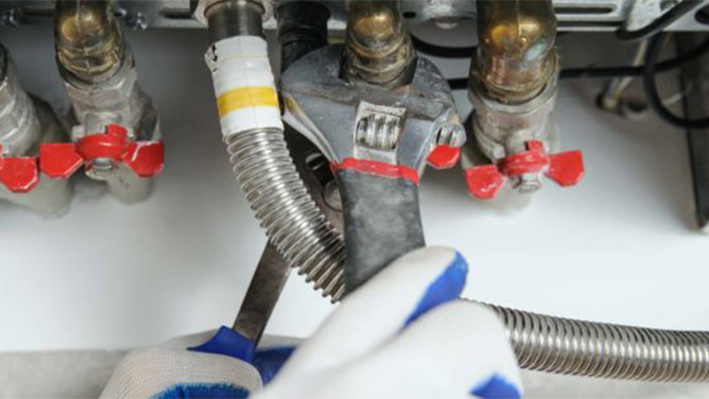
If you suspect a boiler leak or pressure problem, first identify whether you have a steam or hot-water (hydronic) boiler, then check the gauge, visible piping and any active dripping — without disassembling anything. If pressure is climbing, the relief valve is discharging or you see water near electrical components, shut the system down and call HVAC 911 for a qualified service technician.
Check out: Boiler repair help and emergency next steps
What’s happening
Steam and hot-water boilers transfer heat differently, so “normal” operating pressure and common leak points differ. Steam systems boil water to create steam that rises through piping, while hot-water systems circulate heated water through a closed loop.
A “leak” can be an actual water escape from a fitting, valve, tank or a pressure-control issue that forces water out through the relief valve. Pressure issues can also show up as banging noises, uneven heat, frequent cycling or the system shutting down to protect itself.
Why it happens
Leaks often start at threaded connections, circulator flanges, drain valves, air vents or around the boiler itself due to age, corrosion or vibration. On steam systems, leaking vents, failed radiator valves or a compromised wet return can mimic a boiler-side leak.
Pressure problems are commonly tied to failed controls (pressuretrol on steam, aquastat on hot water), a waterlogged expansion tank (hot water) or a malfunctioning automatic water feeder (steam). Mineral buildup, sludge and poor water quality can accelerate corrosion and cause components to stick or fail.
What HVAC Technicians see in the field
HVAC service technicians often find that homeowners treat steam and hot-water boilers the same, which leads to incorrect “fixes” such as overfilling a steam boiler or repeatedly bleeding a system that isn’t designed for it. We also see small, slow leaks ignored until they trigger relief valve discharge, electrical faults or corrosion that spreads to nearby fittings.
In many cases, the initial symptom is subtle, such as a damp spot under a valve or a pressure gauge that slowly creeps up before the system begins short cycling or losing heat. When we can catch it early, repairs are typically more straightforward and less disruptive.
What you can safely do now
Start by confirming which system you have. Steam boilers typically have a sight glass and a low-pressure gauge, while hot-water boilers usually have a pressure/temperature gauge and an expansion tank. Then look for obvious moisture at fittings, valves and around the relief valve discharge pipe.
Check the pressure gauge and note the reading, but do not attempt to adjust internal controls or remove panels. If you have a hot-water system and see a waterlogged expansion tank (heavy, warm or dripping), do not drain it yourself unless you are trained and the system is safely isolated.
Use this quick checklist for safe next steps:
- Look for active dripping at valves, unions and the relief valve discharge.
- Check the gauge and write down the reading for the technician.
- Inspect the floor area for pooling or water tracks near electrical wiring.
- Verify the thermostat is calling for heat normally (no rapid on/off).
- Turn the system off if you see water near electrical components or hear unusual banging.
[INSERT IMAGE: Close-up photo of boiler pressure gauge with readable needle | ALT: Boiler pressure gauge showing operating pressure reading]
When to call an HVAC technician
Call immediately if the relief valve is discharging, pressure is rising quickly or you see water near electrical components, burners or ignition controls. Also, call if you hear loud banging, hissing or repeated cycling that doesn’t match normal heating operation.
If you cannot confidently identify whether the system is steam or hot water, or if the leak source is not obvious, professional diagnosis is the safest path. Avoid repeated resets or refilling, because incorrect water level or pressure can worsen damage and create unsafe conditions.
What an HVAC technician will do
A technician will identify the boiler type, verify safe operation and confirm whether the issue is a leak, a control failure or a pressure-management problem. They will inspect relief valve operation, gauge accuracy and the condition of key components such as vents, feeders, expansion tanks and circulators.
For steam systems, they may check the water-level controls, skim/clean as needed and evaluate returns and vents for hidden leaks. For hot-water systems, they may test the expansion tank charge, look for air intrusion, verify circulator performance and confirm the system is filling and regulating pressure correctly.
Prevention tips
Have the boiler inspected regularly so that controls, relief valves and pressure-management components can be tested before the peak heating season. Address small drips early, because slow leaks can accelerate corrosion and lead to larger failures.
For hot-water systems, monitor pressure trends and the condition of the expansion tank and avoid frequent manual refilling. For steam systems, maintain proper water level and ensure vents and returns are functioning, since poor venting and hidden return leaks can create recurring pressure and water problems.
FAQs
How can I tell if my boiler is steam or hot water?
Steam boilers commonly have a sight glass and operate at low pressure, while hot-water boilers use a closed loop with an expansion tank and a pressure/temperature gauge. If you’re unsure, do not guess, have a technician confirm.
Why is my boiler relief valve leaking?
Relief valves discharge when pressure or temperature is unsafe or when the valve itself is failing. The root cause is often a pressure-control issue, a waterlogged expansion tank (hot water) or overfilling/feeder problems (steam).
Is it safe to keep running a boiler with a small leak?
No. Small leaks can worsen quickly and may lead to corrosion, electrical damage or relief valve discharge. It’s best to shut the system down if the leak is active and schedule service.
What pressure should my boiler be at?
It depends on whether the system is steam or hot water, as well as on the equipment design. Use the gauge as a reference, but rely on a technician to confirm normal operating range and correct any control issues.
Call HVAC 911
If you’re dealing with boiler leaks and pressure issues, it’s safer and faster to involve a qualified HVAC technician before the problem escalates, especially if the safe steps haven’t resolved it.
HVAC 911 is a referral service affiliated with the best local licensed, bonded and insured HVAC contractors in the area. They employ highly qualified service technicians who have completed over 10,000 hours of training and undergone rigorous background checks. Call HVAC 911 today!

