
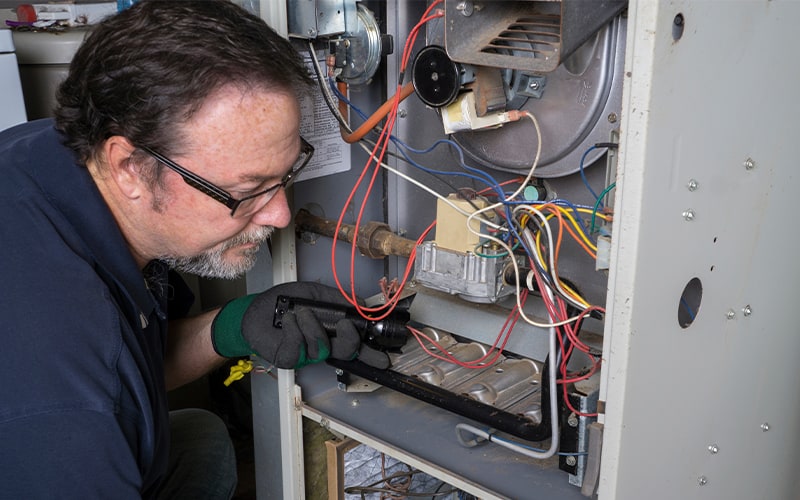
If your furnace is making rattling, squealing or booming noises, turn the system off if the sound is loud, sudden or accompanied by odor or smoke, then check the filter and vents for airflow issues. If noises persist or you suspect a combustion or mechanical fault, contact HVAC 911 for a referral to an HVAC technician in our network, who will diagnose the issue.
What’s happening
Furnace noises are often the first sign that a component is loose, worn or operating abnormally. Some sounds are minor (such as a light rattle from a loose panel), while others can indicate safety concerns (such as combustion-related booms).
Because a furnace combines moving parts, airflow and combustion or high heat, a new noise should be treated as a diagnostic clue. The key is matching the sound type to likely causes and knowing what checks are safe for a homeowner.
Why it happens
Rattles commonly come from loose access panels, blower housing vibration, unsecured ductwork or debris near the blower compartment. They can also be caused by expanding/contracting duct metal as temperatures change.
Squeals are frequently related to motor or blower issues, such as worn bearings, a failing blower motor or belt problems on older belt-driven systems. A high-pitched squeal that starts at startup or continues during operation should be treated as a mechanical wear warning.
Booms (or a “bang” at ignition) can be more serious and may be linked to delayed ignition, dirty burners, incorrect gas-to-air mix or other combustion issues. If you hear repeated booms, shut the system down and call an HVAC technician.
What you can safely do now
- Set the thermostat to off if the noise is loud, sudden or repeating, then wait a few minutes.
- Check and replace the air filter if it is dirty; restricted airflow can amplify noise and trigger overheating.
- Confirm vents and returns are open and not blocked by furniture, rugs or drapes.
- Listen for where the sound is coming from (furnace cabinet vs. ductwork) without opening sealed compartments.
- Inspect for obvious loose panels and tighten accessible screws if safe; do not remove burner covers or access combustion areas.
When to call an HVAC technician
Call an HVAC technician immediately if you hear booming/banging at ignition, grinding, metal-on-metal scraping or a squeal that continues after a filter change. You should also call if the furnace shuts off repeatedly, displays error codes you do not understand or if you notice burning smells, smoke, soot or scorching.
If a carbon monoxide alarm activates, treat it as an emergency: Shut off the furnace, evacuate the house and call 911. After alerting safety forces, contact an HVAC contractor to diagnose and fix the problem.
Do not continue running a noisy furnace if there is any sign of combustion or electrical trouble.
What an HVAC technician will do
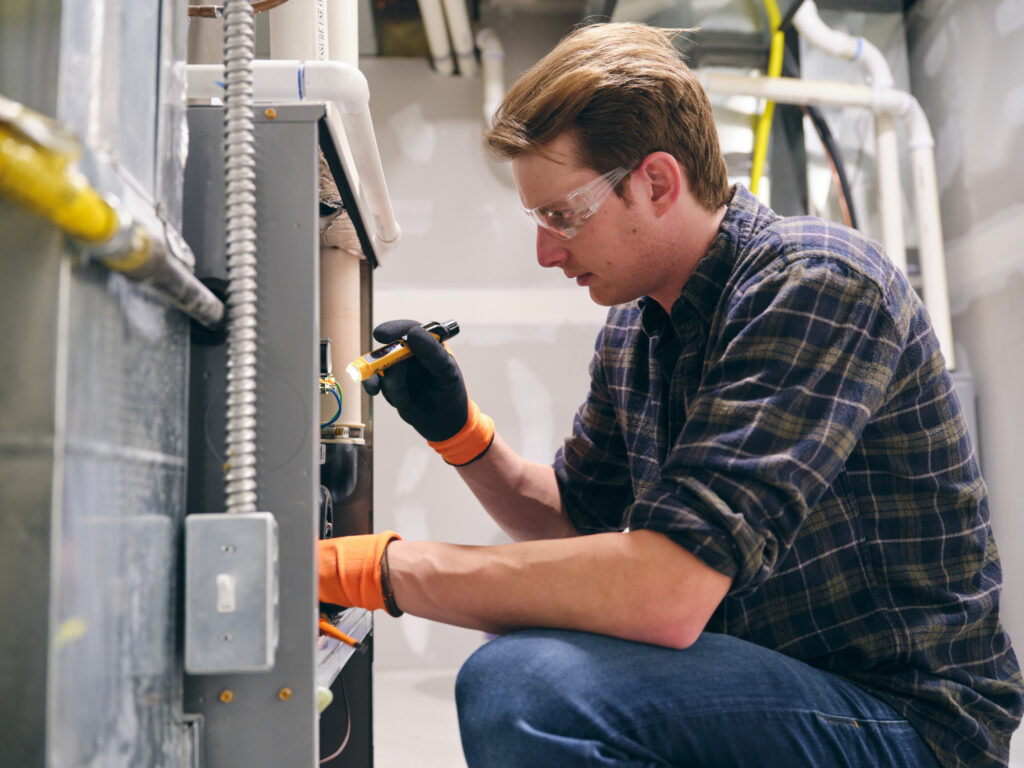
An HVAC technician, such as those employed by HVAC 911-affiliated contractors, will identify the noise source by observing the furnace through a full cycle and checking airflow, blower operation and cabinet/duct vibration. They may measure static pressure, inspect the blower wheel, motor and mounts and verify that panels and duct connections are secure.
For ignition-related booms, they will inspect burners, ignition components and combustion performance, then clean or adjust as needed. They will also verify safety controls and confirm the system runs smoothly before returning it to service.
Prevention tips
Replace filters on schedule and keep returns and supply vents unobstructed to reduce airflow stress and vibration. Schedule seasonal maintenance so burners, ignition components, blower assemblies and safety controls are inspected and cleaned before peak heating demand.
If your ductwork is prone to rattling or popping, an HVAC technician can recommend targeted supports, sealing or balancing to reduce noise and improve comfort. Addressing small noises early often prevents larger mechanical failures later.
FAQs
Is it normal for a furnace to make some noise?
Some soft sounds can be normal (air moving, a soft click at startup), but new, loud or changing noises are not. Treat new rattles, squeals or booms as reasons to investigate.
Why does my furnace squeal when it turns on?
A startup squeal can indicate blower motor, bearing wear or belt issues on older systems. If it persists after basic airflow checks, have an HVAC technician inspect the motor and blower assembly.
What causes a loud boom when the furnace starts?
A boom can be caused by delayed ignition or burner/ignition issues and should be taken seriously. Turn the system off and contact an HVAC technician for a combustion and safety inspection.
Can a dirty filter make the furnace louder?
Yes. Restricted airflow can increase strain on the blower, leading to vibration, overheating, shutdowns and louder operation. Replacing the filter is a safe first step.
Call HVAC 911 Today
If you’re dealing with strange furnace noises like rattles, squeals and booms right now, it’s safer and faster to get a qualified HVAC technician involved before the problem escalates—especially if the safe steps haven’t resolved it.
Our affiliated, licensed, bonded and insured contractors will guide you through the process and ensure all HVAC work is done correctly. They employ highly qualified HVAC technicians who have completed over 10,000 hours of training and undergone rigorous background checks. Call HVAC 911 today to speak with one of our contractors in your area.

