
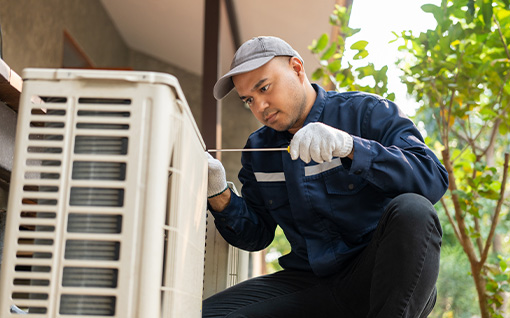
A pre-summer AC tune-up is one of the most important steps you can take before the cooling season starts, and a clean air filter, while helpful, is only one part of what your system needs to run reliably all summer long.
Before the heat arrives, homeowners should schedule professional air conditioner maintenance that covers refrigerant levels, electrical connections, coil condition and airflow throughout the system. If your AC hasn’t been serviced in over a year or is showing any signs of reduced performance, it’s time to call HVAC 911 for a referral to an HVAC contractor near you.
Why a Filter Change Alone Won’t Protect Your AC This Summer
Every spring, millions of homeowners swap out their air filters, flip on the AC for the first time and assume they’re set for summer. That habit is understandable, as filter changes are easy, inexpensive and widely promoted as the go-to maintenance task. However, an air filter only addresses one variable in a system that has dozens of moving parts, electrical components and mechanical connections that can degrade quietly over a long, idle winter.
As the cooling season approaches, HVAC contractors begin fielding calls from homeowners whose systems either won’t start, cool unevenly or run constantly without reaching the set temperature. Many of these problems could have been caught weeks earlier with a thorough pre-season inspection. The busy summer service window means longer wait times and more discomfort, which is why getting ahead of the season with a tune-up is worth scheduling now.
How Deferred AC Maintenance Leads to Summer Breakdowns
Air conditioners are out of sight and largely out of mind for six or more months in most climates. During that time, components don’t simply sit idle; they’re exposed to temperature swings, humidity changes and sometimes pest activity. Refrigerant lines can develop small leaks. Electrical contacts can oxidize. Evaporator and condenser coils accumulate dust, pollen and debris that restrict airflow far more significantly than a dirty filter alone would.
The filter myth persists partly because it’s the only maintenance task most homeowners ever see or touch. HVAC systems are designed to be low-maintenance, but low-maintenance is not no-maintenance. Manufacturer recommendations for annual service exist because the system has components that wear, degrade and require periodic calibration or cleaning that can’t be done from the utility closet with a new filter in hand.
Deferred maintenance also compounds over time. A system that was slightly low on refrigerant last summer will be less efficient this summer and may fail completely a year later. A coil that was 20 percent blocked last fall may be 40 percent blocked by June if it isn’t cleaned. Each skipped tune-up narrows the margin between a system that works and one that doesn’t.
What HVAC Technicians Find During Pre-Season AC Inspections
Technicians arriving for early-season tune-ups can encounter a variety of issues. The condenser coils — the large unit outside the home — are often matted with cottonwood, grass clippings and compressed debris that the homeowner couldn’t see from a distance. Inside, evaporator coils may show mold or mildew growth from condensation that sat through the winter. Neither of these conditions is resolved by changing the air filter.
Technicians also commonly find refrigerant levels that have drifted below the manufacturer’s specification, worn capacitors that are still technically functioning but likely to fail under the load of a hot summer day and blower motors with dry bearings that are drawing excess power. These are quiet problems, as the system may appear to cool adequately right up until it doesn’t. A pre-season inspection catches them while scheduling is flexible, and the repair is straightforward.
How to Prepare Your AC Before the Technician Arrives
There are several things you can do before a technician arrives to prepare your system and make the most of the visit. Start by clearing the area around your outdoor condenser unit — remove any debris, trim back vegetation to at least two feet of clearance on all sides and remove any covers placed over the unit during winter. Good airflow around the condenser is essential to efficient operation.
Inside, check every supply and return vent in your home to make sure furniture, rugs or curtains haven’t blocked them over the winter. Make sure to walk through this checklist before scheduling service:
- Change your air filter if it hasn’t been replaced in the last 30 to 90 days, depending on your filter type and household conditions.
- Clear the area around the outdoor condenser unit of leaves, mulch, cottonwood and any winter covers.
- Check all supply and return vents to confirm none are blocked by furniture, rugs or stored items.
- Test your thermostat by setting it to cool and confirming the system starts, runs and reaches the set temperature.
- Note any unusual sounds, smells or performance changes from last season, as this information helps the technician diagnose issues faster.
- Locate your system’s documentation, including the model and serial numbers, installation date and any previous service records you have on hand.
When to Schedule an AC Tune-Up or Service Call
If your system hasn’t been professionally serviced in more than a year, that alone is reason enough to schedule a tune-up before summer. Beyond the routine service interval, there are specific signs that warrant a call sooner: the system takes noticeably longer to cool your home than it did last year, the air coming from the vents feels less cold than expected, your energy bills have risen without a clear explanation or the system cycles on and off frequently without maintaining a steady temperature.
Any system that is more than 10 years old deserves a closer look before peak cooling season, particularly if it has never had a refrigerant check or a coil cleaning. A technician can assess whether the system is worth maintaining for another few seasons or whether a replacement conversation makes more sense now rather than after an emergency failure in July.
What’s Included in a Professional AC Tune-Up
During a pre-season tune-up, a technician will inspect and clean both the indoor and outdoor coils, check refrigerant charge and look for signs of leaks, test electrical connections and components, including the capacitor and contactor, measure airflow across the evaporator and verify that the blower motor is operating within specifications. The thermostat calibration will be confirmed, and the condensate drain line will be checked and flushed to prevent summertime overflow.
At the end of the visit, the technician should provide a summary of what was inspected, what was found and what was done. If any components are showing wear that doesn’t yet require replacement but should be monitored, a good technician will note that clearly. Ask for documentation of refrigerant levels before and after any adjustment — this is useful information to have for future service visits and warranty purposes.
How to Track Your AC Service History After a Tune-Up
After any HVAC service visit, keep a simple record in a consistent place such as a folder, phone note or home binder. Record the date of service, the technician’s findings, any parts replaced and the refrigerant levels, if adjusted. This information is useful if you ever need to make a warranty claim, sell your home or explain the system’s history to a future technician.
Before signing off on any service visit, ask the technician to walk you through what they found and what they did. Ask whether any components are approaching the end of life and what the signs of failure would look like. This conversation takes five minutes and can prevent a surprise breakdown. If a replacement recommendation is made, ask about the available options and the timeline that makes sense given the system’s current condition.
For recurring issues — such as a system that needs refrigerant added every season — schedule a diagnostic visit rather than treating it as routine maintenance. Repeated refrigerant loss indicates a leak that should be located and repaired, not refilled annually. Getting ahead of a chronic problem is almost always less disruptive and less costly than addressing it after a failure.
FAQs: AC Tune-Up and Pre-Season HVAC Service
- Does a professional tune-up come with any kind of documentation I should keep?
- Yes. A reputable technician should provide a written service summary that includes what was inspected, what was tested and what was found. If refrigerant was added, the amount and resulting levels should be noted. If any components were replaced, the part information should be included. Keep this record with your other home maintenance documents, as it is useful for warranties, future service calls and home resale.
- What if I can’t find any previous service records for my system?
- That’s more common than most homeowners expect, especially after buying a home or after a service gap. Start fresh. Have a technician perform a full inspection and document the system’s current state. From that point forward, keep a record after each visit. The technician can also use the unit’s model and serial number to look up the installation date and original specifications, which helps establish a service baseline.
- I’ve heard I might be able to get a rebate or tax credit for upgrading my AC — is that something HVAC 911 handles?
- HVAC 911 technicians can help you identify equipment that qualifies for available utility rebates or federal efficiency credits based on current program requirements. However, the actual filing of tax credits is handled through your tax return and should be reviewed with a tax professional. Utility rebates are typically processed separately through your energy provider. Always confirm eligibility details before purchasing equipment with an incentive in mind.
- My upstairs is always warmer than my downstairs. Would a tune-up fix that?
- A tune-up may help if the imbalance is related to reduced airflow, a dirty coil or refrigerant issues — all of which affect how effectively the system distributes cooling. However, uneven temperatures in multi-story homes can also result from duct design, insulation differences or zoning limitations that a standard tune-up won’t resolve. A technician can assess whether the issue is a maintenance problem or a system design consideration and recommend the appropriate next step.
Call HVAC 911
Don’t wait until July to find out your system can’t keep up. Scheduling a pre-summer AC tune-up now is the most reliable way to avoid a breakdown during the hottest stretch of the year — and to confirm your system is running at peak efficiency before energy bills climb.
HVAC 911 is a referral service affiliated with the top local licensed, bonded and insured HVAC contractors in the area. They employ highly qualified technicians who have completed over 10,000 hours of training and undergone rigorous background checks. Call HVAC 911 today!

