
It happens every year. The first cold night rolls in, you nudge the thermostat up, the furnace rumbles to life, and a few minutes later, the whole house smells like someone left the toaster on. The dog looks at you. You look at the vents. Is something on fire?
Most of the time, no. That first-of-the-season smell is usually just dust burning off parts that sat untouched all summer, and it fades on its own. However, not every furnace smell is that innocent. Some point to a worn-out part, and a few mean you need to get out of the house and make a phone call right away.
Here’s how to tell the difference, what you can do to cut down on that first start-up smell and when it’s time to call HVAC 911 for a referral to a licensed HVAC contractor near you.
HVAC 911 | Furnace Maintenance
The Real Cost of Ignoring a Strange Furnace Smell
Your nose is one of the best early warning systems your heating system has. A smell that doesn’t go away is often the first sign of a problem, long before you hear a strange noise or lose heat altogether.
Ignoring it can get expensive, however. An overheating blower motor that gets caught early might need a simple repair. One that keeps running until it burns out will need to be replaced, which usually happens on the coldest night of the week when every HVAC company is slammed. Wiring problems can do the same, and they carry a real fire risk on top of the repair bill.
The primary concern is safety. Certain smells can indicate a gas leak or a cracked heat exchanger, and a cracked heat exchanger can allow carbon monoxide to enter your home. Carbon monoxide has no smell of its own, so the odors around it are sometimes the only clue you get.
Why Your Furnace Smells When It First Turns On
Summer Dust on the Heat Exchanger and Burners
For months, your furnace has been sitting quietly while dust, pet hair and lint settled on the burners, the heat exchanger and inside the cabinet. When the system fires up for the first time, all that gets hot fast and burns off. The result is that dry, slightly toasty smell that drifts through the house. It’s harmless and should clear up within the first hour of running.
Dusty Ducts and Vents
Dust doesn’t only collect on the furnace. It also settles inside ductwork and on floor registers. When warm air starts moving through for the first time in months, it carries some of that dust along, which can intensify the smell and leave a light film on nearby surfaces.
A Filter That’s Seen Better Days
A dirty air filter can make the smell stronger and stick around longer. It’s packed with dust that heats up every time the system runs, restricting airflow and causing parts to run hotter than they should. If you didn’t swap the filter before turning on the heat, that’s the first thing to check.
Stuff Stored Too Close to the Furnace
Basements and utility closets tend to become storage zones over the summer. Boxes, laundry, paint cans or holiday decorations stacked against the furnace can get hot and give off a burning odor. Worse, they can become a fire hazard. Your furnace needs breathing room.
How to Tell If It’s More Than Just Dust
A normal start-up smell is mild, dry and fades within an hour or so. These smells are different:
- Rotten eggs or sulfur. Natural gas has an additive that smells like rotten eggs, so leaks are easy to notice. Don’t touch light switches or the thermostat. Get everyone outside and call your gas utility or emergency services from there.
- Burning plastic, rubber or an electrical smell. This can mean an overheating motor, a failing part or wiring trouble. Shut the furnace off at the thermostat and call a pro.
- A sharp chemical or formaldehyde-like smell. This can be a sign of a cracked heat exchanger. Turn the system off, open some windows and get it inspected before running it again.
- Smoke or exhaust fumes inside the house. A blocked flue or chimney can push combustion gases back into the home. Turn off the furnace, get some fresh air and call for help.
- Musty or moldy odors. Moisture in the ductwork, a damp filter or a clogged condensate line on a high-efficiency furnace can all lead to mold growth.
- A burning smell that hangs around for more than a few hours, or comes back every time the heat runs.
- Your carbon monoxide alarm goes off. Leave the house right away, call emergency services and don’t go back in until you’re told it’s safe.
What You Can Do Right Now
Leave anything involving gas lines, wiring or removing furnace panels to a professional. However, the following simple steps before and during the first start-up can reduce the smell and help you spot real problems faster:
- Put in a fresh air filter before you turn on the heat for the first time.
- Vacuum around the furnace and wipe down the outside of the cabinet. Vacuum floor registers and return vents, too.
- Clear a few feet of space around the furnace. Move boxes, laundry, cleaning supplies and anything flammable somewhere else.
- Crack a couple of windows and run the system for an hour or so to let the dust burn off and air out.
- Test every carbon monoxide detector in the house, and replace batteries or detectors that are past their expiration date.
- Stay nearby the first time the heat runs. If the smell gets stronger instead of fading, or changes to one of the smells above, shut it off.
How an HVAC Pro Checks Out a Burning Smell
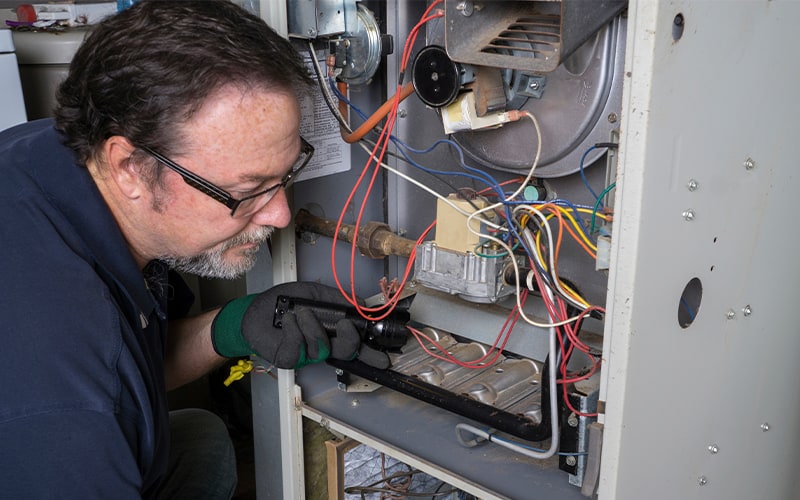
When a smell doesn’t fade, a professional HVAC inspection is the safest next step. An HVAC 911-affiliated contractor will typically start by asking what the smell is like and when it shows up, then work through the system to track down the source.
That usually means checking the blower motor and electrical connections for signs of overheating, inspecting the burners and flame, and closely inspecting the heat exchanger for cracks. The technician will also make sure the flue and vent pipes are clear, test for carbon monoxide and check for gas leaks around the furnace connections. If moisture or mold is the issue, they’ll look at the filter, the ductwork and the condensate drain.
If they find a worn or damaged part, the service technician will walk you through repair or replacement options so you can make the call before a small problem turns into a midwinter emergency.
Preventing That Burning Smell Next Year
You can’t stop every bit of dust from settling over the summer, but these habits keep the first start-up a lot more pleasant:
- Schedule a professional furnace tune-up every fall, before you need the heat. A cleaning removes much of the dust that causes the smell.
- Change your air filter regularly, and always before the heating season starts.
- Run the heat briefly on a mild fall day so the dust burns off on your schedule, with the windows open, instead of on the first freezing night.
- Keep the furnace area clean and clutter-free all year long.
- Have your ducts inspected if you notice excessive dust or a musty smell whenever the system runs.
- Keep working carbon monoxide detectors on every level of your home and near sleeping areas.
Frequently Asked Questions About Furnace Smells
How long should the burning smell last when I first turn on my furnace?
Usually, no more than an hour or so of run time. In a very dusty system, you might catch a faint whiff on the first day. If the smell sticks around longer than that, gets stronger or keeps coming back, have the system checked.
Is the burning dust smell dangerous?
A brief dusty smell on the first start-up isn’t dangerous for most people. It can bother anyone with allergies or asthma, so opening a few windows while it burns off helps. Any smell that doesn’t fade is worth a closer look.
What does a gas leak smell like?
Like rotten eggs or sulfur. If you notice it, don’t flip any switches, light anything or use the thermostat. Get everyone out of the house and call your gas utility or emergency services once you’re outside.
Why does my furnace smell like it’s burning plastic?
An electrical or burning plastic smell often points to an overheating blower motor, failing wiring or a foreign object, such as a toy or bit of debris, that fell into a vent or the unit. Turn the furnace off and call a professional. It’s not a smell to wait on.
Will a furnace tune-up get rid of the smell?
A tune-up includes cleaning the burners and other key parts, which removes much of the dust that causes the first start-up smell. Even more important, the technician can catch problems behind the smells that aren’t normal before they lead to a breakdown.
Call HVAC 911 Today
If your furnace is giving off a smell that won’t go away, don’t wait for the coldest night of the year to find out what’s wrong. Call HVAC 911 for a referral to a top contractor in your neighborhood.
Our affiliated licensed, bonded and insured contractors will guide you through the process and ensure all the work is done correctly. They employ highly qualified technicians who receive over 10,000 hours of training and undergo rigorous background checks.

