
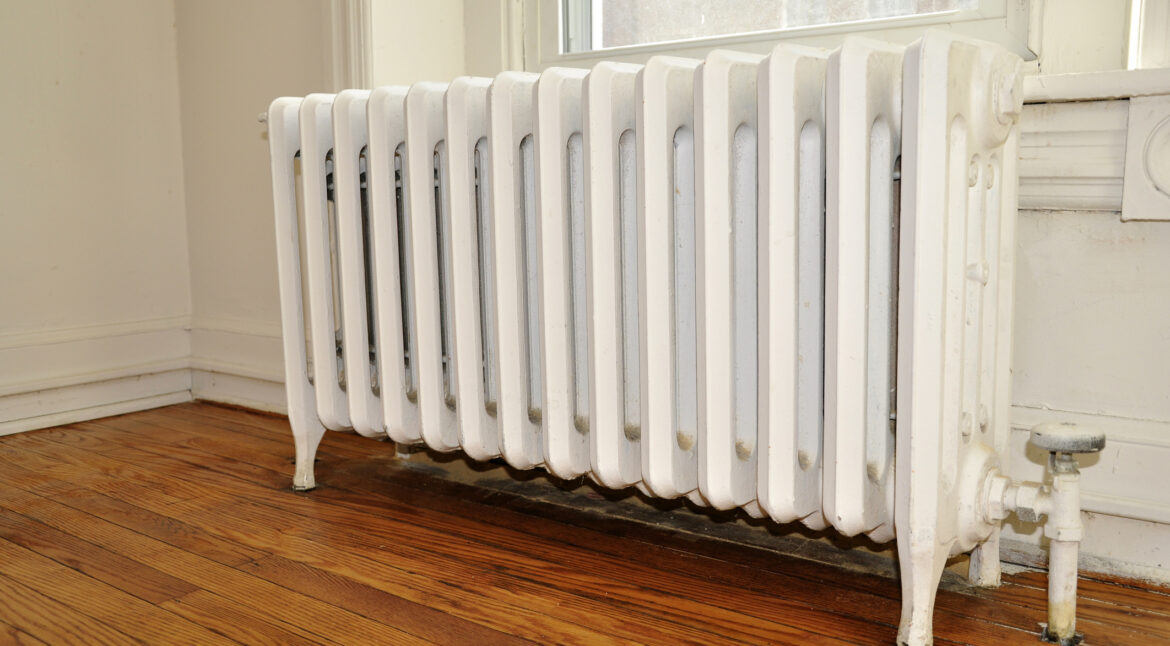
When the first cold night arrives, and you turn the heat back on, the last thing you want is a radiator that stays cold at the top, a boiler that won’t fire or a pressure gauge sitting in the red. Most of those issues are preventable, and you can prevent them in September.
Bleeding your radiators and checking your boiler pressure are two of the simplest, most effective fall maintenance tasks a homeowner can do, and together they set your hydronic heating system up for a full winter of even, efficient heat.
Learn why fall boiler prep matters, how to bleed a radiator safely, how to read and adjust boiler pressure and when to call HVAC 911 for a referral to a local, licensed, bonded and insured HVAC contractor.
Why Fall Boiler Prep Matters
A hydronic boiler system sits idle for most of the warm months. During that idle period, small amounts of air can work their way into the system, water may evaporate from expansion tanks and pressure relief valves, dust can settle on burner components and any minor issues from last winter can develop into bigger ones. A boiler that shut down fine in April can absolutely fail to start in October if nothing was done in between.
Bleeding radiators and verifying boiler pressure are the two homeowner-level tasks that address the most common late-summer changes to the system: trapped air in the radiators and pressure that has drifted outside the normal operating range. Neither task is dangerous when the system is a standard residential hot water boiler. Both make a noticeable difference in how the system runs all winter.
Hot Water vs. Steam Radiators: Know Your System First
Before you touch a bleed valve, confirm what kind of system you have. This is the single most important step, and it’s the one homeowners most often skip.
Hot Water (Hydronic) Radiators
Hot water systems circulate heated water under pressure through radiators, baseboards or in-floor tubing. The boiler has a pressure gauge on the front, typically reading 12-15 psi when the system is cold. Radiators have a small bleed valve at the top corner, a slotted screw or a square nut that accepts a radiator key. Hot water radiators need bleeding when air becomes trapped in them.
Steam Radiators
Steam systems, still common in older homes across the Northeast, are different. The boiler heats water to steam, which rises through the piping into radiators, where it condenses back to water as it releases heat. Steam radiators have air vents on the side, not bleed valves at the top. The vents open, let air out as steam arrives, then close automatically. You do not bleed a steam radiator with a key. Attempting to do so can damage the vent and worsen the problem.
The way to tell which system you have is to look at the boiler. A pressure gauge reading in psi indicates a hot water system. A sight glass showing a water level, plus a low-water cutoff, indicates a steam system. If you’re unsure, an HVAC 911-affiliated service technician can identify the system on a maintenance visit and show you what’s what.
The remainder of this blog covers hot water (hydronic) systems. Steam boiler prep is a different topic and generally best left to a professional.
How Air Gets Into a Hot Water Heating System
Air is a natural byproduct of hydronic system operation. Small amounts of air can enter the system through dissolved air in the fill water, which comes out of solution as the water heats and cools. Minor leaks at fittings or valves can also draw in a small amount of air over time. Finally, any time the system is drained or topped up, air enters directly. Over a full summer of dormancy, air migrates upward and collects at the highest points, usually the top of radiators on upper floors.
Once trapped, air prevents hot water from reaching that section of the radiator. The radiator ends up hot at the bottom, cold at the top and delivers a fraction of its rated output. Multiply that by every radiator on the upper floors, and the whole system underperforms while the boiler works harder to try to compensate.
Signs Your Radiators Need Bleeding
Look and listen for the following:
- A radiator that is hot at the bottom but cold at the top when the heat has been running for at least 30 minutes.
- Gurgling, bubbling or trickling sounds coming from a radiator during operation.
- Rooms on upper floors that heat unevenly or take much longer to warm up than rooms below them.
- The boiler is cycling more frequently than it did last season to maintain the same thermostat setting.
- Heating bills are climbing without a corresponding change in weather or fuel prices.
How to Bleed a Radiator: Step by Step
Bleeding a hot water radiator is a straightforward homeowner task. You’ll need a radiator key (available at any hardware store), a small container or thick rag to catch water and a few minutes per radiator. Follow these steps:
- Turn off the boiler and circulator pump, then wait 30 to 60 minutes for the system to cool. Bleeding a hot system risks burns from escaping water.
- Start with the radiator on the lowest floor closest to the boiler. Work your way outward and upward from there.
- Locate the bleed valve at the top corner of the radiator. It’s a small square nut or slotted screw.
- Hold the container or rag under the valve. Insert the radiator key and turn it slowly counterclockwise, no more than a quarter- to half-turn.
- You’ll hear a hiss as air escapes. Let it hiss until a steady stream of water — not a spurt or a dribble — comes out.
- Close the valve immediately by turning the key clockwise until it’s snug. Don’t overtighten, as that damages the valve seat.
- Move to the next radiator and repeat until all radiators have been bled.
- When you’re done, check the boiler pressure gauge. Bleeding removes water along with air, and the system pressure will have dropped.
If you can’t get water to come out of a bleed valve, the boiler pressure is too low to push water up to that radiator. Repressurize the system first (see below), then try again.
Understanding Your Boiler Pressure Gauge
The pressure gauge on a residential hot water boiler is one of the most useful diagnostic tools in the mechanical room. Learn what it should read at what temperature, and you’ll catch developing problems long before they become emergencies.
Normal Operating Range
A typical residential hydronic boiler should show 12 to 15 psi when the system is cold (thermostat off, boiler idle for at least an hour). As the system heats up and the water expands, pressure rises to around 20-25 psi at full operating temperature, which is normal. Above 30 psi, the pressure relief valve will open and release water to protect the system, indicating that something has gone wrong upstream.
What Low Pressure Means
Pressure below 10 psi cold is too low. The circulator pump can’t reliably move water against gravity to the upper floors; the radiators don’t fill completely, and the boiler may fail to fire on some models with low-water cutoffs. Low pressure after bleeding radiators is normal and easy to fix. Low pressure that keeps returning after you top up the system points to a leak somewhere, often at a radiator valve, a fitting or the boiler itself.
What High Pressure Means
Pressure that climbs above 25-30 psi during normal operation, or rises steadily over days without operation, indicates a problem. The most common cause is a failed or waterlogged expansion tank, which no longer has room to absorb the expansion of heated water. This is an HVAC 911 service call — not a homeowner fix.
How to Repressurize a Boiler
If your gauge reads below 12 psi cold, you need to add water to the system through the boiler’s fill valve. On most residential boilers, this is a lever or knob near the water supply line.
- Locate the fill valve (also called the feed water valve or fill loop).
- Open it slowly. Watch the pressure gauge as you do.
- Close the valve when the gauge reads 12-15 psi cold. Don’t overshoot; excess pressure is harder to remove than to add.
- Wait 15 to 30 minutes and check the gauge again. Some settling is normal, but a significant drop means water is going somewhere it shouldn’t.
Some newer boilers have automatic fill valves that maintain pressure without homeowner intervention. If your gauge is low and the auto-fill isn’t correcting it, that’s a service call for an HVAC 911-affiliated technician.
When to Call HVAC 911 Instead of DIY
Bleeding radiators and topping up pressure are within the reach of most homeowners. Anything below the list of tasks above is the responsibility of a licensed HVAC service technician. Call HVAC 911 when:
- You have a steam boiler. Steam systems require different maintenance and different diagnostic skills than hot water systems.
- Boiler pressure keeps dropping after you top it up. There’s a leak somewhere in the system that needs to be found and repaired.
- Boiler pressure keeps climbing above the normal range. The expansion tank likely needs service or replacement.
- The boiler won’t fire, cycles erratically, or produces unusual noises.
- You see water anywhere around the boiler, at radiator valves, or on ceilings and walls near heating pipes.
- Bleeding a radiator produces discolored, rusty water — a sign of sediment in the system that needs to be flushed.
- You haven’t had a professional inspection in the past 12 months. HVAC 911-affiliated service technicians perform a full boiler assessment that goes well beyond what a homeowner can check.
Frequently Asked Questions About Radiator Bleeding and Boiler Pressure
How often should I bleed my radiators?
Once a year, at the start of the heating season, is enough for most homes. If you notice cold spots or gurgling in midwinter, bleed the affected radiators at that point, too. If you find yourself bleeding radiators frequently, air is getting into the system through a leak or a failing component, and it’s time to call HVAC 911.
What pressure should my boiler be at?
For most residential hot water boilers in the U.S., 12 to 15 psi cold and 20 to 25 psi at operating temperature are normal. Some systems, especially in taller homes, may be set slightly higher. Your boiler’s manufacturer label or manual will specify. If you’re not sure, an HVAC 911-affiliated technician can confirm the correct pressure for your system.
Why does my boiler pressure keep dropping?
Bleeding radiators lowers pressure temporarily and is normal. Pressure that drops repeatedly without an obvious cause means water is leaving the system somewhere, such as a leaky radiator valve, a fitting or the boiler itself. This requires a service call. HVAC 911-affiliated contractors can pressure-test the system and identify the source.
Do I need to bleed a steam radiator?
No. Steam radiators use air vents that release air automatically as steam arrives. Attempting to bleed a steam radiator with a key can damage the vent and cause bigger problems. If a steam radiator isn’t heating properly, the vent may be stuck or failed. An HVAC 911 technician can replace it.
Can I skip a professional inspection if I bleed the radiators myself?
No. Bleeding radiators and topping up pressure are basic maintenance tasks. A professional inspection covers the parts of the boiler you can’t safely check yourself, including the burner, heat exchanger, flue, combustion efficiency, gas pressure, safety controls and expansion tank. Most manufacturer warranties also require documented annual professional inspections to remain in effect.
How do I know if my system is hot water or steam?
Look at the boiler. A pressure gauge reading in psi and a circulator pump on the piping indicate a hot water system. A sight glass showing a water level, a low-water cutoff, and no circulator pump indicates a steam system. If you’re still unsure, don’t bleed anything until an HVAC 911 technician can confirm.
How long does it take to bleed all the radiators in a home?
For a typical home with six to 10 radiators, plan on 20 to 40 minutes total, plus the cool-down time before you start. Add a few more minutes to check and adjust the pressure at the boiler when you’re done.
Call HVAC 911 Today
Bleeding radiators and checking boiler pressure are a solid start on fall heating prep, but they’re not a substitute for a professional inspection. Every hydronic system also needs an annual look at the burner, heat exchanger, flue and safety controls. These are the parts homeowners can’t check safely. Call HVAC 911 for a referral to a trusted local heating and cooling contractor who will guide you through the process.
Our affiliated licensed, bonded and insured contractors will guide you through the process and ensure all the work is done correctly. They employ highly qualified technicians who receive over 10,000 hours of training and undergo rigorous background checks. Call HVAC 911 today to speak with a contractor in your area.

