
The end of the cooling season is the most important maintenance window that most homeowners skip. The AC system that ran all summer has accumulated biological growth on its evaporator coil, residue in the drain pan and moisture throughout the air-handling components. When the system sits idle through fall and winter, those conditions have months to develop into the mold and musty odors that greet homeowners when they restart in spring. Before the system shuts down for the season, change the filter, flush the condensate drain and schedule a professional coil cleaning if the system hasn’t had one this year.
If you’ve noticed a musty smell during the cooling season that hasn’t resolved on its own, call HVAC 911 now rather than letting the problem go until spring.
Air Conditioner Maintenance Services | HVAC 911
What’s Happening
As summer transitions to fall, HVAC systems shift from daily operation to months of inactivity. During the cooling season, the evaporator coil, which is the indoor component that absorbs heat from the air, operates in a wet environment. Warm, humid air passes across a cold coil surface, causing moisture to condense on the fins and drain away through the condensate system. This is normal and intentional: removing moisture from the air is part of how an air conditioner conditions a space. What isn’t intentional is the organic material, including airborne dust, skin cells, pollen and other particles, that accumulates on the damp coil surface throughout the season.
When the system shuts down after temperatures drop, the coil is still damp, organically fouled and about to sit in a warm, enclosed space for several months. Those are near-ideal conditions for mold and mildew growth. The mustiness that many homeowners associate with the first run of the AC in spring isn’t a feature of the startup process. It’s the odor of biological growth that established itself on the coil, drain pan and surrounding surfaces during the off-season. End-of-season cleaning interrupts that cycle before the growth has months of undisturbed time to develop.
Why It Happens
The primary driver of end-of-season mold and odor development is moisture left on the evaporator coil and in the drain pan when the system shuts down. The evaporator coil runs wet throughout the cooling season, and when the system stops operating, any residual moisture on the coil surface and in the drain pan doesn’t evaporate immediately, particularly in a closed air handler cabinet where air circulation is limited. Organic material already on the coil provides a nutrient source. Warmth from the surrounding mechanical space provides energy. The combination of residual moisture, organic fouling and warmth during the transitional months of fall allows mold and mildew to establish on the coil surface.
A second contributing factor is a partially or fully blocked condensate drain. The condensate drain removes water from the drain pan continuously during operation. When the drain is partially clogged with algae growth, debris or mineral deposits, water backs up in the pan, prolonging the time standing moisture remains in contact with the coil base and surrounding cabinet surfaces. A drain pan that holds water at the end of the season, rather than draining fully, significantly increases humidity inside the air handler cabinet during the off-season and accelerates conditions conducive to biological growth.
The third factor is a dirty evaporator coil. Even a clean filter allows fine particles to pass through and deposit on the coil fins over time. A coil with a layer of accumulated dust and organic material presents a significantly larger surface area for moisture to cling to and for mold spores to colonize. This is why end-of-season cleaning, rather than a spring cleaning before startup, is the more effective intervention. It removes the fouling before it has months to interact with residual moisture, rather than after the mold has already had a full winter to develop.
What You Can Safely Do Now
There are several steps homeowners can take at the end of the cooling season that reduce the conditions that allow mold and odor to develop. None of these replace a professional coil cleaning, but they address the most accessible contributing factors and make a meaningful difference in what the system looks and smells like when it starts up in spring.
- Change the air filter before shutting the system down for the season. A filter that has accumulated a full season of dust and debris sits in the airstream throughout the off-season, and any moisture in the air handler can wick into a loaded filter, contributing to odor and a biological growth environment. Starting next season with a clean filter is good practice.
- Flush the condensate drain line before the last run of the season. A simple flush with a cup of water poured into the drain opening at the air handler confirms the line is flowing freely. If water backs up rather than draining promptly, the line is at least partially blocked and should be cleared before the system sits idle. A clogged drain that leaves standing water in the pan during the off-season is a primary contributor to mold and odor.
- Wipe down the accessible interior surfaces of the air handler cabinet. The drain pan, the cabinet walls near the coil and the interior surfaces visible when the access panel is removed can be wiped down with a damp cloth to remove accumulated dust and moisture residue. This is a surface-level step that doesn’t replace professional coil cleaning, but it removes some of the organic material that supports biological growth during the off-season.
- Check the condensate drain pan for standing water or visible biological growth. A dry, clean drain pan at the end of the season is the goal. Visible water, a visible green or black film along the pan walls or a musty odor from the cabinet when the access panel is opened are all signals that a professional cleaning is warranted before the system sits idle.
- Clear debris from around the outdoor condenser unit before covering or leaving it for the season. Leaves, debris and organic material that accumulate in and around the condenser fins during fall and winter create their own biological growth environment and can affect performance when the system restarts. Clearing the unit and covering it loosely, allowing ventilation while keeping out debris, is appropriate in most climates.
- Schedule a professional end-of-season service if the system hasn’t had a coil cleaning this year. A technician who services the system at the end of the cooling season, rather than at the beginning of the next one, addresses numerous issues before they worsen over the winter months. Scheduling in early fall, before the service backlog of spring startup season, also provides more flexible appointment timing.
When to Call an HVAC Service Technician
Call a technician if you notice a musty or moldy odor from the vents at any point during the cooling season, if the drain pan has visible standing water or biological growth when you checked it or if the system hasn’t had a professional coil cleaning in two or more years. These conditions indicate that the needed maintenance has progressed beyond what homeowner-level steps can address, and that leaving the system through the off-season reliably results in a worse situation in spring.
Call promptly rather than waiting until spring if you observe any of the following:
- Visible mold growth on or near the evaporator coil or in the drain pan
- Musty odor that is present even when the fan runs without cooling, which indicates the growth is established in the airstream rather than just on the coil surface
- Visible moisture staining on the walls or ceiling near the air handler that wasn’t there at the start of the season.
These conditions benefit from professional attention before the off-season rather than after, as the problem is easier to address before it has had additional time to develop. Additionally, moisture staining near the unit may indicate a drain overflow that caused secondary damage.
What HVAC Service Technicians See in the Field
Technicians performing end-of-season service calls consistently find that the systems with the most significant biological growth are those that ran all summer with a partially clogged condensate drain. Standing water in the drain pan throughout the entire cooling season creates a reservoir of moisture at the base of the coil that keeps the lower portion of the evaporator fins continuously damp, far more than a properly draining system would. The mold that develops in this environment isn’t limited to the pan surface. It climbs the coil fins and distributes spores into the airstream with every hour the blower runs. By the end of the season, these systems have established mold colonies that are visible to the naked eye when the access panel is opened, which produce a strong musty odor even before the system has been idle for a single day.
Technicians also regularly find homeowners who are surprised by the condition of their evaporator coil after what seemed like a routine season. The coil is invisible during normal operation, and a homeowner who changes the filter diligently and hears no unusual noises has no reason to suspect the coil has been accumulating organic fouling for two or three seasons. A system that looks fine from the outside can harbor a coil so fouled it’s running at significantly reduced efficiency. The homeowner pays for it on their electricity bill, and the coil becomes an increasingly favorable environment for end-of-season biological growth. Regular coil inspection and cleaning, not just filter changes, is what keeps these systems at their rated performance.
What an HVAC Technician Will Do
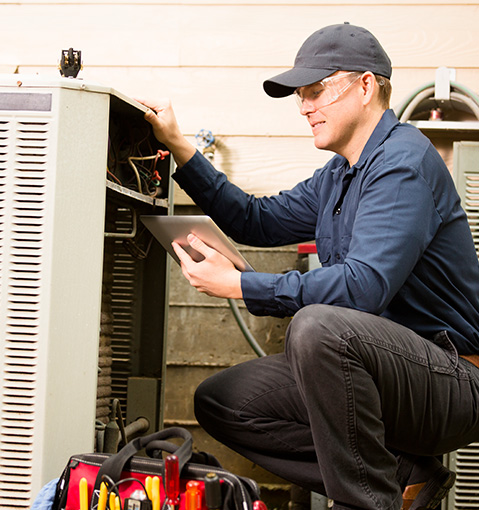
During an end-of-season maintenance visit, the technician will inspect the evaporator coil for fouling and biological growth, assess the condition of the drain pan and condensate drain line and flush or clear the drain as needed. The coil cleaning process involves applying an appropriate cleaning agent to the coil fins, allowing it to penetrate and loosen accumulated debris and biological material and then rinsing the coil so the loosened material drains away through the condensate system. The technician will also inspect the blower wheel and housing, which accumulates organic deposits that contribute to odor, and the duct connections at the air handler, where biological growth can establish.
If visible mold is found on the coil or in the drain pan, the technician will address it directly and advise on whether a UV light system or antimicrobial treatment is appropriate for the system, given its history and your home’s humidity profile.
At the end of the visit, the technician will confirm the drain is flowing freely, note the coil’s condition before and after cleaning and provide any recommendations to prevent recurrence. A system that is cleaned and confirmed dry at the end of the season starts next spring without the mold establishment period that an uncleaned system goes through every fall.
Be Prepared
After an end-of-season service, keep the technician’s written summary with your system records and note what was found, specifically whether any biological growth was present and the condition of the drain. This information is useful at the next service visit and helps a future technician understand the system’s history without having to start from scratch. If the technician recommended a UV light installation or a coil treatment to reduce biological growth, ask for the specific recommendation in writing so you can follow up at the beginning of next season.
At the start of the next cooling season, before the first prolonged period, run the system for a brief time with the fan only and note whether any musty odor is present. A system that was properly cleaned at the end of the season should start up without a significant odor. If there is a noticeable smell on the first run, it may indicate that some biological growth has established despite the cleaning or that the off-season conditions in the mechanical space were particularly favorable for regrowth. Addressing it promptly at the start of the season, rather than hoping it clears on its own, yields better results.
If your system has produced a musty odor at startup for multiple consecutive seasons, the end-of-season cleaning habit alone may not be sufficient to break the cycle. A technician can assess whether a UV germicidal light installed in the air handler, which runs continuously and prevents biological establishment on the coil surface, is appropriate for your system. This is a more proactive solution than reactive cleaning and is particularly worth considering in humid climates or in systems that have a documented history of recurrent biological growth.
FAQs
Why does my AC smell musty when I first turn it on in spring, even though I change my filter regularly?
Filter changes address what enters the airstream from the return side, but they don’t prevent the organic material that accumulates on the evaporator coil itself during the season from supporting mold growth during the off-season. The evaporator coil runs wet throughout summer, and any organic material already on the fins, including dust, pollen and biological particles fine enough to pass through the filter, provides a growth medium when the damp coil sits idle through fall and winter. The musty smell at startup is the odor of that established growth being disturbed and distributed through the duct system. Regular coil cleaning, not just filter replacement, is what prevents it.
Is a musty smell from the vents always mold or could it be something else?
Not always, though mold and mildew on the evaporator coil and in the drain pan are the most common sources. Other contributors include a condensate drain that has developed algae or bacterial growth in the drain line itself; organic deposits on the blower wheel; dust and debris in the duct system that became damp from humidity or a minor condensate overflow; and biological growth on duct liner material in systems with internally lined ductwork. A technician performing an end-of-season inspection can identify which of these is contributing to the odor in a specific system and address each source. Treating the odor as a generic air quality issue without identifying the source typically produces temporary improvement rather than a lasting fix.
Can I clean the evaporator coil myself, or does it need a professional?
The evaporator coil is located inside the air handler cabinet, behind the access panel, and is accessible to a homeowner who is comfortable working around the system. Light surface cleaning with a soft brush or a coil-safe spray cleaner is a reasonable homeowner task for a coil with minimal fouling. However, a coil with significant accumulation, visible biological growth or heavy debris requires professional cleaning equipment and appropriate cleaning agents to fully address without damaging the delicate coil fins. A technician also flushes the coil and confirms the drain is flowing after cleaning, a step that matters because the cleaning process loosens debris that needs to exit through the drain rather than remain in the pan. If the coil appears heavily fouled or shows visible biological growth, professional service is the appropriate course of action.
Will a UV light installed in the air handler actually prevent mold from coming back?
Yes, when properly sized and positioned for the specific system. UV germicidal lights installed in the air handler emit ultraviolet radiation that inhibits biological growth on the coil surface and in the drain pan by disrupting the cellular processes that allow mold and bacteria to establish and reproduce. They are most effective when positioned to maintain continuous exposure on the coil surface rather than just treating air passing through the system. They don’t eliminate the need for coil cleaning, since a coil with heavy existing fouling should be cleaned before a UV light is installed, but they significantly reduce the rate at which biological growth reestablishes after a cleaning. A technician can advise on whether the system’s configuration and the home’s humidity profile make a UV light a worthwhile investment based on the coil’s documented history.
Call HVAC 911
If your system is heading into the off-season with a musty smell, a fouled coil or a drain that wasn’t running cleanly, it’s safer and more effective to get a qualified technician involved before the system sits idle for months rather than after. End-of-season cleaning is one of the highest-value maintenance investments in the HVAC calendar, and fall scheduling is significantly more flexible than the spring startup rush.
HVAC 911 is a referral service affiliated with the top local licensed, bonded and insured HVAC contractors in the area. They employ highly qualified technicians who have completed over 10,000 hours of training and undergone rigorous background checks. Call HVAC 911 today!

