
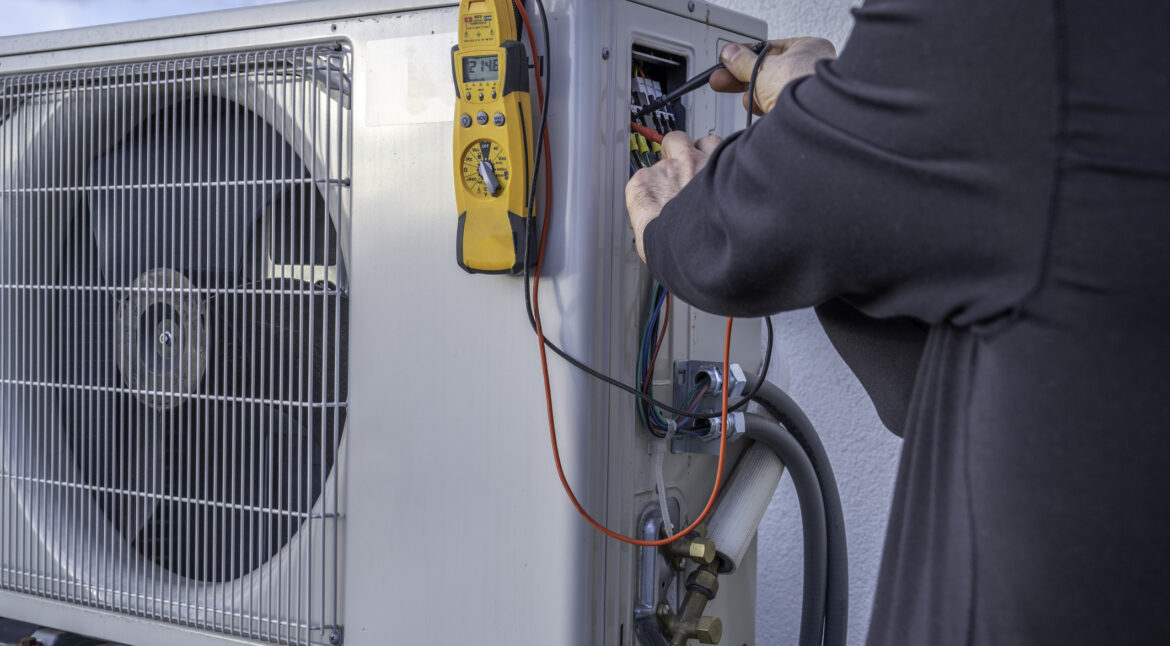
Heat pumps are built to handle both heating and cooling, but high-humidity summer conditions place specific demands on the system that routine filter changes won’t address.
Before peak summer arrives, homeowners should schedule a professional tune-up that includes coil cleaning, a condensate drain inspection and a refrigerant check to confirm the system can manage moisture as effectively as it manages temperature. If your heat pump is running but your home still feels humid and sticky, that’s a sign the system needs a technician’s attention now.
Heat Pump Maintenance Services | HVAC 911
What’s Happening
As summer approaches, heat pump owners face a seasonal challenge that furnace-only households don’t. Their system must transition from months of heating to cooling and dehumidification, often with very little time in between. Unlike a traditional air conditioner that sits idle all winter and simply picks up where it left off, a heat pump has been running through the cold months, accumulating wear on components that are now being asked to perform a completely different function under some of the year’s most demanding conditions.
High-humidity days are the real test. A heat pump removes moisture from the air as part of the cooling process, but only when the system is operating efficiently and the components responsible for condensation and drainage are clean and clear. A coil coated in dust and debris or a refrigerant charge that has drifted below specification can compromise the system’s dehumidification capacity, leaving a home that reaches the set temperature but still feels uncomfortably damp.
Why It Happens
Heat pumps dehumidify by passing warm, moist indoor air across a cold evaporator coil. Moisture in the air condenses on the coil surface and drains away through the condensate system. When the coil is coated in dust, pollen or biological growth, it can’t cool the air as efficiently, and the condensation process is disrupted. The result is reduced moisture removal even when the system appears to be cooling normally — a common source of homeowner frustration in humid climates.
Condensate drain problems are a parallel issue that compounds over a season. The drain pan and drain line that carry condensate away from the coil are warm, wet and dark — ideal conditions for algae and mold growth that can partially or fully block the drain. A blocked drain causes water to back up into the drain pan and eventually overflow, producing moisture damage near the air handler and triggering float switch shutoffs. Homeowners can sometimes interpret this as a system malfunction rather than a drainage problem.
Refrigerant charge is the third variable that affects humidity control. A heat pump that is slightly low on refrigerant may still cool the air to the thermostat’s set point, but it does so less efficiently and with reduced capacity to remove moisture. Since the temperature in the home may seem normal, homeowners often don’t associate a sticky, humid feeling with a refrigerant issue. Without a technician to measure the charge directly, the underlying cause can go unaddressed through an entire season.
What HVAC Service Technicians See in the Field
Technicians servicing heat pumps before summer often find fouled evaporator coils. After running all winter, the indoor coil builds up a significant layer of debris by spring. Many homeowners are caught off guard by this — especially those who stay on top of filter changes. The problem is that filters don’t catch everything. Fine particles slip through and accumulate on the coil over time.
Condensate drain issues are among the most frequent findings on summer tune-up calls. Technicians find drain lines partially blocked by algae growth, drain pans with standing water or float switches tripped and reset without the underlying blockage cleared. In some cases, the homeowner has been resetting the system repeatedly without realizing that a drainage problem is causing the shutdown. Documentation of previous service is often absent in these situations, making it difficult to establish whether the drain was addressed at the last visit or has been accumulating issues for multiple seasons.
What You Can Do Now
There are practical steps you can take before a technician arrives that will help the system perform better and give the technician a clearer starting point. Start by checking and replacing the air filter if it’s due. A clean filter is the minimum baseline for any tune-up and ensures the technician evaluates the system under normal operating conditions rather than a restricted airflow scenario.
Walk through the areas around both your indoor air handler and your outdoor unit to identify anything that might be affecting airflow or drainage. Then use this checklist to make sure you’ve covered the basics:
- Check and replace the air filter if it hasn’t been changed in the last 30 to 90 days, depending on filter type and household conditions.
- Clear the area around the outdoor unit of vegetation, debris and any materials within two feet of the unit on all sides to ensure adequate airflow.
- Locate the condensate drain line — typically a PVC pipe exiting near the indoor air handler — and check that the end of the line is clear and draining freely.
- Check the area around the indoor air handler for any signs of moisture, water staining or standing water near the drain pan.
- Note your system’s model and serial numbers from the data plates on both the indoor and outdoor units and write them down before the technician arrives.
- Record any humidity or comfort complaints from last summer — specific observations like “the house felt damp even when it was cool” help the technician focus the inspection on the right areas.
When to Call an HVAC Technician
Schedule a tune-up before the first sustained stretch of hot, humid weather — not after. If your heat pump hasn’t been professionally serviced in more than a year, that’s the baseline reason to call. Beyond routine service intervals, call sooner if your home felt consistently humid last summer despite the system running normally, if you noticed water near the indoor unit at any point, if the system has been shutting itself off unexpectedly or if airflow from the vents seems weaker than it used to be.
Any active signs of a drainage problem — water on the floor near the air handler, a musty smell from the vents or visible mold near the indoor unit — should be treated as an urgent call rather than a routine scheduling request. These conditions can cause damage to flooring, walls and the air handler itself if left unaddressed, and they will worsen as the system runs more frequently through the summer months.
What an HVAC Technician Will Do
During a heat pump tune-up focused on summer readiness, a technician will:
- Clean the evaporator and condenser coils
- Check and clear the condensate drain line and drain pan
- Measure refrigerant charge and inspect for leaks
- Test electrical components, including the capacitor and contactor
- Verify that the reversing valve (the component that switches the heat pump between heating and cooling modes) is operating correctly
- Measure airflow across the evaporator
- Check the blower motor for proper operation
The technician should provide a written service summary at the end of the visit covering what was inspected, what was found and what was done. If the condensate drain was flushed, that should be noted. If the refrigerant was adjusted, the before-and-after measurements should be documented. Ask specifically whether the system’s dehumidification capacity appears normal for its age and size.
Be Prepared
After the tune-up, keep the service summary with your other home maintenance records and note the date of service. If the technician flushed the condensate drain, add a reminder to check the drain line outlet once a month during the cooling season — a slow drip from the end of the line when the system is running confirms it’s draining as it should. If the line stops dripping on a day when the system has been running for several hours, that’s a signal to check for a blockage before it becomes a full stoppage.
Before the technician leaves, ask whether any components are showing wear that doesn’t yet require replacement. Capacitors, contactors and blower motors all have finite service lives, and a technician who has just inspected your system is the best source of information about which components are approaching the end of their useful range. Knowing that a part may need replacement in the next season or two gives you time to plan rather than react.
If your heat pump is more than 10 years old and has been struggling with humidity control despite good maintenance, ask the technician about current equipment options. Newer heat pump models often include variable-speed compressors that manage humidity more effectively than single-stage equipment because they can run at lower speeds for longer cycles, which extracts more moisture per hour of operation.
FAQs
What documentation should I receive after a heat pump tune-up?
A reputable technician should provide a written service summary that includes what was inspected, what was found and what was done. If the condensate drain was cleaned, the coils were washed or refrigerant was adjusted, those actions should each be noted along with any relevant measurements. If any components were flagged as showing wear, that should be documented as well. Keep this summary with your system’s other records — it’s useful for future service calls, warranty questions and home resale documentation.
I have no service history for my heat pump. Does that affect what the technician can do?
It means the technician starts from scratch rather than building on prior findings, but it doesn’t limit what can be done. The technician can use the model and serial numbers on your equipment to determine the unit’s age and original specifications, then perform a full inspection based on what they observe directly. For humidity-related concerns specifically, the coil condition, drain system and refrigerant charge can all be evaluated and addressed regardless of whether any prior service records exist.
My heat pump cools the house to the right temperature. Does that mean the humidity is being handled correctly, too?
Not necessarily. A heat pump can reach the thermostat’s set point while still underperforming on dehumidification if the refrigerant charge is slightly low, the coil is fouled or the system is oversized for the space and cycles off before completing a full dehumidification pass. The clearest indicator of a humidity problem is how the home feels. If it reaches the set temperature but still feels sticky or damp, the system’s moisture removal capacity should be evaluated by a technician, even if the cooling function appears normal.
Can I add a whole-home dehumidifier to work alongside my heat pump, or do I need to replace the unit?
A standalone whole-home dehumidifier can be added to most existing duct systems to work alongside a heat pump without replacing the heat pump itself. This is a common solution when a home consistently struggles with summer humidity and the heat pump is otherwise functioning well. A technician can assess whether your duct system can accommodate the addition and determine the appropriate capacity for your home’s size and typical humidity levels.
Call HVAC 911
Getting your heat pump ready for high-humidity summer conditions is a job that goes well beyond a filter swap. A qualified technician can clean the coils, clear the condensate system, verify refrigerant charge and confirm the system is set up to manage both temperature and moisture effectively. This will give you a more comfortable home with fewer surprises once the heat arrives.
HVAC 911 is a referral service affiliated with the top local licensed, bonded and insured HVAC contractors in the area. They employ highly qualified technicians who have completed over 10,000 hours of training and undergone rigorous background checks. Call HVAC 911 today!

