
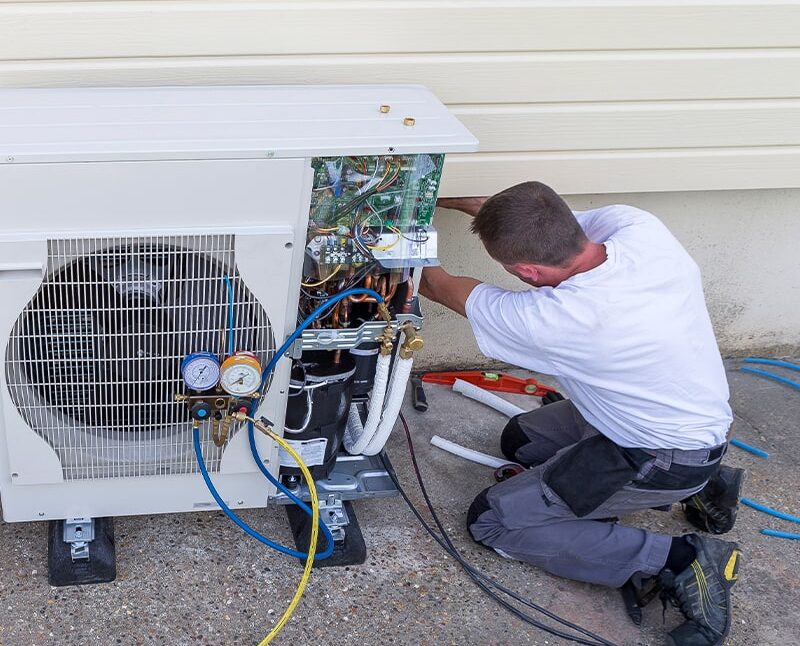
August is when both solar energy production and residential cooling demand reach their annual peaks, which makes it the month when a well-integrated solar and heat pump system delivers its greatest financial return.
The pairing works because heat pumps are among the most efficient electric loads in a home, and solar generates its maximum output precisely when the heat pump is running hardest. Getting the combination right, however, requires careful planning around system sizing, electrical capacity and available incentive programs before any equipment is purchased.
Consult a qualified HVAC technician to assess your home’s readiness and identify what incentives apply before committing to a system. Call HVAC 911 to connect with a local licensed contractor who can guide you through the full process.
Renewable Energy and HVAC Incentives | HVAC 911
Also, remember to consult a tax professional regarding your specific eligibility and requirements for any available credits or incentives.
What’s Happening
The financial case for pairing solar with a heat pump has strengthened considerably in recent years, driven by improvements in both technologies and by the incentive programs that reduce upfront investment. A modern variable-speed heat pump is two to four times more efficient per unit of electricity consumed than a conventional air conditioner. Every kilowatt-hour of solar electricity directed to a heat pump produces significantly more cooling output than the same energy directed to older equipment. In August, when the sun is at its highest angle and solar panels produce at or near their rated output for the longest part of the day, a properly sized system can cover the majority of a home’s cooling energy demand from generation rather than grid purchase.
Homeowners across the country are increasingly turning to this combination as a practical path to meaningful reductions in utility bills, particularly during the summer months when cooling costs dominate household energy budgets. The convergence of available state incentives for both heat pump equipment and solar installations, utility rebate programs and declining equipment costs has moved this from a premium option into a financially reasonable decision for a wider range of households. The key variable that separates a successful integration from a disappointing one is whether the planning, including system sizing, electrical infrastructure assessment and incentive documentation, was done correctly before installation began.
Remember to consult a tax professional regarding your specific eligibility and requirements before making any purchasing decisions based on available credits or rebates.
Why It Happens
The most common reason solar and heat pump integrations underperform expectations is that the solar array was sized for average annual consumption rather than peak summer cooling load. A system sized to offset a home’s annual electricity use may fall short of covering August’s disproportionately high cooling demand, because cooling in the hottest month of the year can represent two to three times the daily electricity use of a moderate spring or fall day. Homeowners who size their solar installation based on annual averages rather than peak-month demand find that their bills drop significantly in spring and fall but remain elevated in August, the month when the financial return on the solar investment should be highest.
A second factor is the electrical panel capacity, which wasn’t assessed before adding both systems. A heat pump replacement, particularly one that replaces a gas furnace and adds electric heating capability for the first time, increases a home’s electrical load. Adding solar generation alongside that increased load requires the panel to manage both grid power imports and the export or self-consumption of solar power. Homes with older panels, panels already near capacity or panels without the breaker space for the required new circuits may need an upgrade before the integration can be completed safely and correctly. These costs and scope need to be factored into the project from the beginning rather than discovered during installation.
Incentive documentation is the third area where integration projects commonly fall short. State incentives for qualifying heat pump equipment and for solar installations may be separate programs with different eligibility thresholds, filing requirements and documentation steps. A homeowner who installs both systems in the same year may be eligible for credits or rebates on both, but only if the equipment meets the applicable efficiency thresholds and the installation is properly documented at completion. Missing a manufacturer’s certification statement, failing to confirm pre-approval requirements for a utility rebate or installing equipment that falls just below a qualifying efficiency tier are all outcomes that cost homeowners incentive dollars they expected. It is entirely preventable when a technician who knows the current program requirements is part of the planning process.
What You Can Safely Do Now
Before calling a technician, there is useful groundwork you can do that makes the consultation more productive and the project scope clearer. The goal is to understand your home’s current energy profile, your electrical infrastructure and what incentive programs are available to you before any equipment decisions are made.
- Pull your electricity bills for the past 12 months, with particular attention to July and August. Your peak month consumption in kilowatt-hours is the most important input for solar system sizing. A technician or solar installer uses this to size a system that covers your actual cooling-season demand, rather than an annual average that understates August demand.
- Locate your electrical panel and note its total amperage and the number of available breaker slots. A 100-amp panel or one with no available breaker space may need an upgrade before a heat pump and solar installation can proceed. It is better to have this conversation with the technician earlier in the process rather than at the midpoint.
- Confirm the type of your current heating and cooling equipment. If your home currently uses a gas furnace for heating and a separate air conditioner for cooling, replacing both with a heat pump is a more significant electrical infrastructure change than replacing an existing heat pump or electric system. A technician needs to know the current setup to assess the load impact of a heat pump installation.
- Check your roof’s orientation and shading conditions. South-facing roof surfaces with minimal shading produce the most solar output. Note which portions of your roof face south and whether trees, chimneys or neighboring structures shade those surfaces during midday hours in summer. This information is a starting point for a solar production estimate.
- Research current state incentive requirements for both heat pump equipment and solar installations. Understanding the requirements before selecting equipment ensures you’re targeting products that actually qualify for the incentives you’re counting on.
- Check your utility’s net metering policy and any available rebate programs. Net metering, which determines how your utility credits you for solar electricity exported to the grid, varies significantly by state and utility. Understanding your utility’s policy affects how the solar system should be sized and what financial return to realistically expect from excess generation.
When to Call an HVAC Technician
Call an HVAC technician before purchasing any equipment or signing any installation contracts. A solar and heat pump integration involves interdependent sizing decisions: the heat pump’s capacity affects the solar system’s required size, and the electrical panel’s capacity constrains both. These need to be evaluated together rather than in sequence. A technician who assesses the full picture before any equipment is selected can identify constraints, confirm compatibility and provide the load and efficiency data a solar installer needs to size the generation system correctly.
You should call a technician if your existing heat pump is more than eight to 10 years old and you’re considering adding solar to work alongside it. An aging heat pump operating at reduced efficiency will consume more electricity per hour of cooling than a current high-efficiency model, which affects how large the solar system needs to be to offset the cooling load. Pairing a new solar array with an inefficient existing heat pump captures less of the available financial return than replacing the heat pump with a qualifying high-efficiency model would. This decision also opens access to heat pump incentive programs that stack with the solar credit. An HVAC service technician can assess whether your existing heat pump warrants replacement as part of the integration project, or whether it can continue to serve effectively alongside the new solar installation for several more seasons.
What HVAC Service Technicians See in the Field
Technicians assessing homes for solar and heat pump integration frequently encounter situations in which the homeowner has already received a solar proposal sized to annual electricity consumption, a number that significantly undersizes the system for August cooling demand. A home that uses 800 kilowatt-hours in April and 1,800 kilowatt-hours in August will have a very different solar experience if the system was sized for the annual average than if it was sized with the August peak in mind. A homeowner whose solar panels cover 90 percent of their annual energy use may cover only 40 percent of their August demand. They’re still paying a large August bill, and are often surprised when the system underperforms during the month that motivated the purchase.
Technicians also consistently find that homeowners planning to add a heat pump alongside solar haven’t confirmed their panel capacity before soliciting equipment quotes. The addition of a heat pump, particularly a dual-fuel or whole-home heat pump replacing a gas system, typically adds 30 to 60 amps of new electrical load. Combined with the new solar interconnection circuit, this frequently requires a panel upgrade that wasn’t budgeted for in either the HVAC or the solar proposal. Identifying this early, during the HVAC technician’s assessment, prevents it from becoming a surprise that delays installation or inflates project cost after contracts are signed.
What an HVAC Technician Will Do
When a service technician arrives to assess a solar and heat pump integration project, the process begins with a load calculation for the home, which is a formal assessment of the heating and cooling requirements based on the home’s size, insulation, window area and local climate. This calculation determines the home’s heat pump capacity and provides an estimate of cooling energy consumption that a solar installer uses to size the generation system. The technician will also assess the electrical panel’s current load, available capacity and breaker space to determine whether an upgrade is needed before the heat pump and solar interconnection can be accommodated.
If an existing heat pump is being retained, the technician will measure its current efficiency and performance to confirm it can serve effectively alongside the new solar installation. If a new heat pump is part of the project, the technician will identify equipment options that meet the efficiency thresholds for available state incentives and utility rebates, confirm the correct capacity for the load calculation and provide the equipment documentation, including efficiency ratings and manufacturer certifications, that incentive program applications require. At project completion, the technician will provide a written summary of all installed equipment, efficiency ratings, permit documentation and any materials needed for tax credit and rebate filings.
Be Prepared
After the solar and heat pump installation is complete, keep the full documentation package, including installation permits, equipment spec sheets, efficiency certification documents, solar interconnection approval and any utility rebate confirmation numbers, in a single, organized location. Utility rebate applications and some state rebates or credits require specific documents from this package, and assembling them at filing time is far easier when they were gathered systematically at installation rather than reconstructed months later.
Before signing off on the completed installation, ask the technician to walk you through the monitoring tools available for both systems. Most heat pump systems and virtually all solar installations include some form of performance monitoring, either through a dedicated app or a web portal, that shows real-time and historical production and consumption data. Understanding how to read this data helps you verify that both systems are performing as expected and identify any performance degradation before it becomes a service issue.
If you installed both systems in the same tax year, consult a tax professional before filing to confirm you are claiming each credit correctly and that the combined claim is structured properly for your tax situation. A tax professional familiar with energy efficiency credits can ensure you capture the full value of both without errors that trigger amended returns.
FAQs
Does adding solar actually make a meaningful difference to August cooling bills, or is the savings mostly in other months?
For homeowners with a heat pump or high-efficiency air conditioner, August is typically when solar delivers its most concentrated financial return. Solar production is at or near its annual peak in midsummer, and cooling demand is at its highest, so solar generation and cooling load overlap almost perfectly during the hottest part of the day. A properly sized system that accounts specifically for the August peak, rather than for annual average consumption, can offset most cooling electricity use during peak production hours when rates are often highest. The key qualifier is sizing. A system sized on annual averages may underperform in August, even if it performs well annually.
Can I add solar to my existing heat pump, or do I need to replace it at the same time?
In most cases, solar can be added to work alongside an existing heat pump without replacing the heat pump, provided the heat pump is functioning well, and the electrical panel has adequate capacity for the solar interconnection. However, an older heat pump operating below its original efficiency rating will consume more electricity per cooling hour than a current high-efficiency model, which means a larger solar array is needed to offset the same cooling load. If the existing heat pump is within a few years of its expected service life or has been requiring frequent repairs, replacing it as part of the solar project captures available heat pump incentive programs and optimizes the solar system sizing simultaneously. This is often a better financial outcome than adding solar now and replacing the heat pump separately in a few years.
Are their state tax credits for solar and heat pumps separate, or do they count as a single combined credit?
There is no national credit, and incentives can differ by state. This means incentives can vary by where you live, your household income and your specific utility provider.
My utility has a net metering program. Does that change how I should size the solar system?
Yes, significantly. Net metering allows you to export solar electricity you don’t use in real time to the grid in exchange for a credit on future bills. If your utility offers favorable net metering, crediting exported electricity at or near the retail rate, you have more flexibility in how you size the solar system. Excess generation in lower-demand months can offset grid purchases in higher-demand months. If your utility has moved to a lower compensation rate for exported power, or if net metering availability is limited, the financial case shifts toward sizing the system to match your consumption as closely as possible rather than oversizing for export. Together, a technician and your utility’s published net metering policy provide the information needed to make a well-informed sizing decision.
Call HVAC 911
If you’re ready to explore pairing solar with a heat pump to reduce your August cooling bills, getting a qualified technician involved before any equipment is selected is the most reliable way to ensure the systems are sized correctly, the electrical infrastructure is ready and the installation qualifies for every available incentive. The planning stage is where the financial return on this investment is won or lost.
HVAC 911 is a referral service affiliated with the top local licensed, bonded and insured HVAC contractors in the area. They employ highly qualified technicians who have completed over 10,000 hours of training and undergone rigorous background checks. Call HVAC 911 today!

